
MORNING 01warm negative
Soft golden portraits.
- Reference
- Warm colour negative film — soft golden portrait character
- Format
- 3:2 / 4:3
- Modes
- Photo only
- Pricing
- Paid in-app unlock
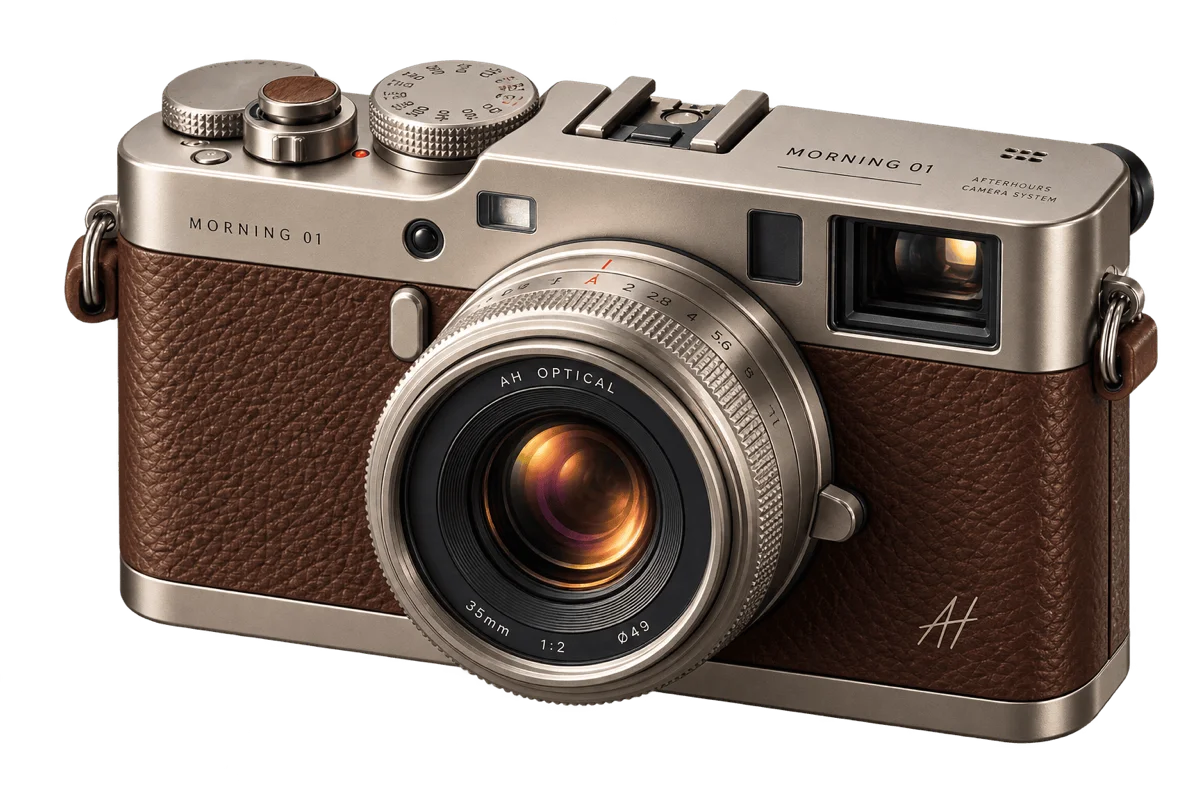
What it simulates
- Warm colour negative LUT
- Shoulder curve (0.80 / 0.35, warmth 0.2) — gentle highlight rolloff
- Vintage-glow stage (22px 0.25, warm cream)
- Halation (0.78 at 10px, warm-orange 0.2 tint)
- Film-blur (0.8) — soft-focus lift
- Warm vignette
- Five variations: Standard, Softer, Warmer, Cooler, Grainier
How it behaves at capture
- Photo mode
- Live in the viewfinder, baked at capture
- Variations swap the LUT
What MORNING 01 is
MORNING 01 is warm portrait film. Golden skin, glowy highlights, a shoulder curve that lifts shadows just enough to keep the frame soft. The vintage-glow stage (22-pixel cream) softens the whole image; the halation stage draws warm-orange bloom around bright edges. Together they give you the specific dreamy warm-negative character that portrait shooters spend years learning to dial in.
How to shoot with MORNING 01
- Point at people. MORNING 01 is a portrait film — skin tones are what it's for.
- Golden hour amplifies the LUT's warmth. Midday works but reads flatter.
- Use variations to tune: Warmer for stronger character, Cooler for restraint, Grainier for extra film character.
- Not the right pick for architecture, landscape, or anything that needs cool colour accuracy.
See also STILL 02 (natural colour, subtler), HIBI-200 (daylight negative), and MONO 100 (b&w).
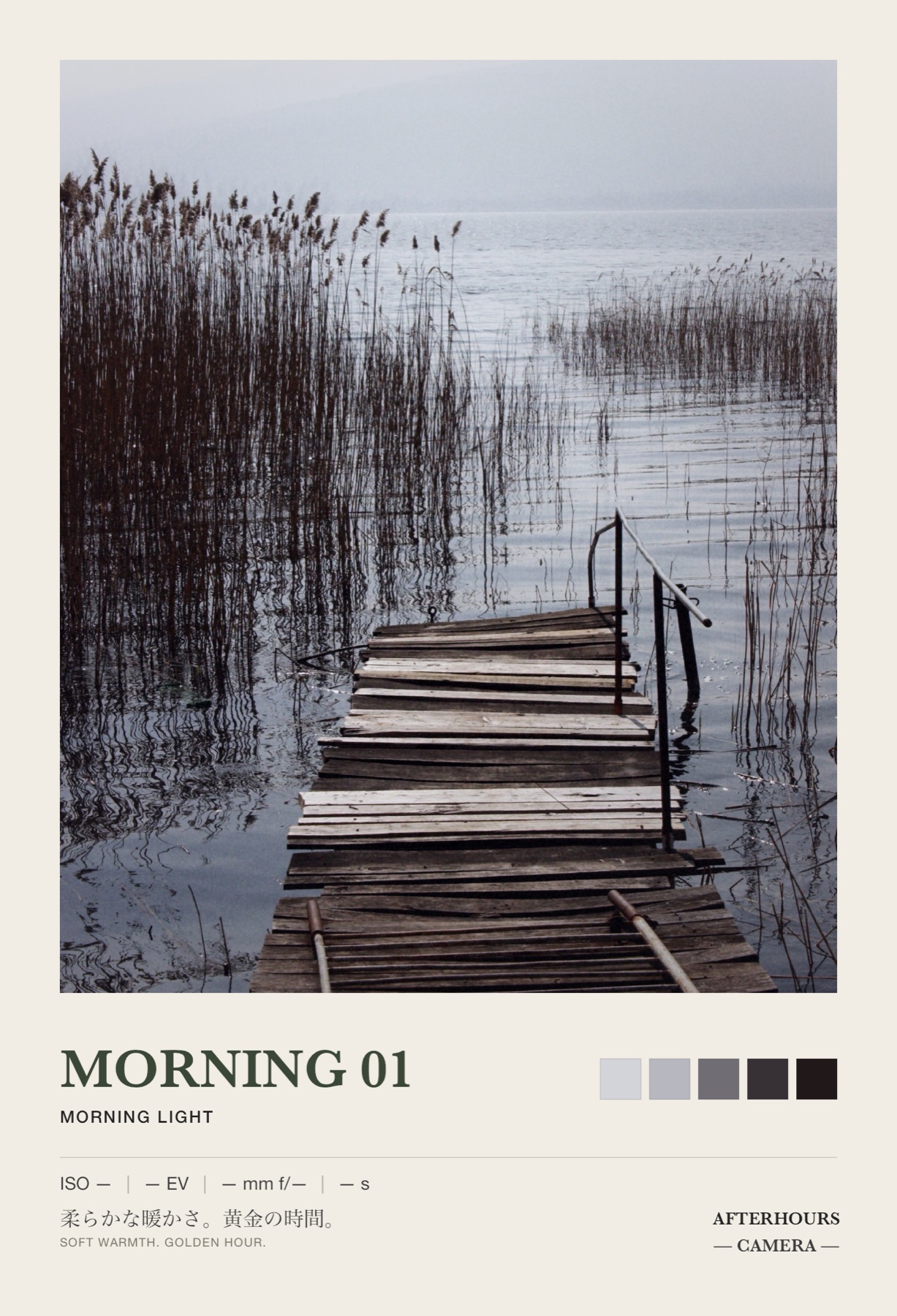
Samples

Frequently asked questions
What is MORNING 01 good for?
Portrait, golden-hour, and skin-tone-forward photography. The warm LUT plus warm halation plus soft film-blur is tuned for the specific character of dreamy warm portrait film — where skin renders golden, highlights glow, and shadows stay lifted.
Is MORNING 01 a filter, or a camera simulation?
A camera simulation, in the sense that it runs live in the viewfinder and bakes at capture. But the FILM shelf's device grammar is intentionally sparser than the AFTERHOURS shelf — one shared 'stocks viewfinder' rather than a per-body chrome. See the [Camera Simulation vs Filters guide](/guides/camera-simulation-vs-filter) for the honest distinction.
Published by Afterhours Camera. Reviewed . Corrections and questions: bricksandcanvas@gmail.com.