
DV-90MiniDV fisheye
The party cam.
- Reference
- MiniDV consumer camcorder with screw-on fisheye adapter, late 1990s / early 2000s
- Format
- 16:9 HD (circular fisheye)
- Modes
- Video only
- Video
- 30fps · 60s max clip
- Flash
- torch
- Pricing
- Free
What it simulates
- Circular fisheye — subtle barrel inside the image circle, dark defocused spill outside
- Rim chromatic aberration (0.55)
- Brightness falloff to the rim (0.5)
- Cool internal-reflection ring / flare (0.5)
- Interlace comb (0.7), dropout smear (0.3), chroma smear (0.7 — heavier than HDV because DV is 4:1:1)
- MiniDV consumer audio — 32 kHz / 12-bit, quantization fizz, mains hum 120 Hz, zoom-servo whine 2800 Hz
- DV OSD chrome
How it behaves at capture
- Video only — no photo mode
- 16:9 HD framing with the fisheye image circle locked on
- AGC welded shut — no gain, pump, or stretch dials
- Torch flash (continuous accessory video lamp)
- 30fps recording, 60-second clip cap
What DV-90 is
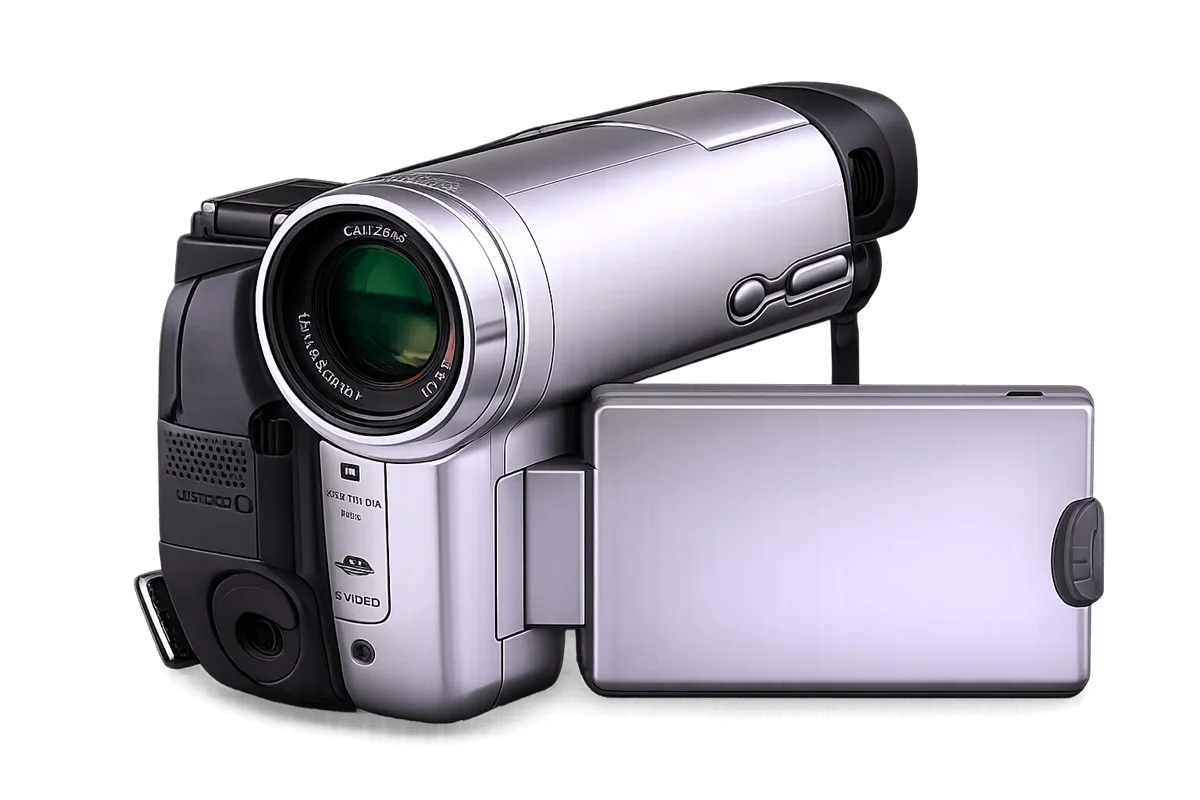
DV-90 is a late-1990s / early-2000s consumer MiniDV camcorder with a screw-on fisheye adapter locked on. The real camera got carried through house parties, skate parks, and dorm hallways; DV-90 keeps the same character — wide, forgiving, low-fi, unashamed.
The image circle
The fisheye adapter draws an image circle inside the frame. Inside the circle: mild barrel distortion, chromatic fringing at the edges, brightness falloff toward the rim, and a cool internal-reflection flare from the adapter glass. Outside the circle: dark defocused spill. That's what the real optic did, and DV-90 draws it the same way.
Why heavier chroma smear than HDV-2000
Consumer DV is 4:1:1 — every two-by-two pixel block shares chroma. HDV was 4:2:0. DV-90 tunes chroma smear heavier than HDV-2000 to match. Real DV footage has visibly softer colour edges than HDV, and DV-90 reflects it.
How to shoot with DV-90
- Hand-held, low-light, close-up. Point at people; that's what the fisheye adapter was for.
- The AGC is welded shut — you don't get to control gain. That's the point; the camera fights the low light for you.
- The torch lifts shadow but doesn't hard-flash; use it in dim interiors, not outside.
See also HDV-2000 (straight MiniDV, 1080p), NS-8 (Hi8), and the nightlife camera-app guide (in progress).
Frequently asked questions
Why is DV-90 called 'the party cam'?
Because that's what the real camera was for. Hand-held MiniDV camcorders with fisheye adapters got passed around at house parties, clubs, and skate videos throughout the late 1990s and early 2000s. DV-90 leans into that use — a wide immersive field of view, forgiving AGC that fights low light, and a look that reads as 'someone's home movie from 2002.'
Can I turn the fisheye off?
No. The fisheye is what makes DV-90 DV-90. Turning it off gives you a plain MiniDV camera, which is closer to HDV-2000. Use HDV-2000 for straight framing.
Why is the chroma smear heavier than HDV-2000?
DV consumer format is 4:1:1 — the chroma channel is subsampled harder than HDV. Real DV-90-era camcorders produced visibly softer colour edges than their HDV successors. The heavier chroma smear on DV-90 matches the format's actual behaviour.
Is DV-90 free?
Yes. DV-90 ships free with the app.
Published by Afterhours Camera. Reviewed . Corrections and questions: bricksandcanvas@gmail.com.